After Claude Fable 5.1 shipped, someone shared a method for stretching its quota: let Fable handle only planning and final review, and hand every implementation step to Opus or Sonnet subagents. The goal is to keep the Fable-specific usage bar and the overall usage bar draining at the same pace.
I understand the motivation. When the Fable bar empties first, you are forced onto a different model, so everyone wants to spend it where it matters most.
But I disagree with the method. Saving quota is fine. Saving it by chopping one task into pieces is not. Work can be split horizontally: Fable writes the plan, Opus builds the whole thing, Fable reviews the result. It cannot be split vertically, with Fable acting as a general contractor over a crew of subagents that only ever report summaries.
Fable 5.1 cut its cache-read price to a quarter of what Fable 5 charged. Anthropic is plainly encouraging you to keep a long task inside one context. Locking Fable into a summary-only foreman role is like hiring a crew that can handle the entire renovation and then telling the lead to stand at the door collecting progress sheets.
Summaries are where the evidence disappears
The larger problem is that a subagent filters information at handoff. It reads dozens of files, rules out a few directions, and reports back a single line: “the problem was in the cache, fixed.” The conclusion may be right. But which leads were eliminated, what anomalies showed up in the tests, and which details could still overturn the diagnosis have all vanished from the summary.
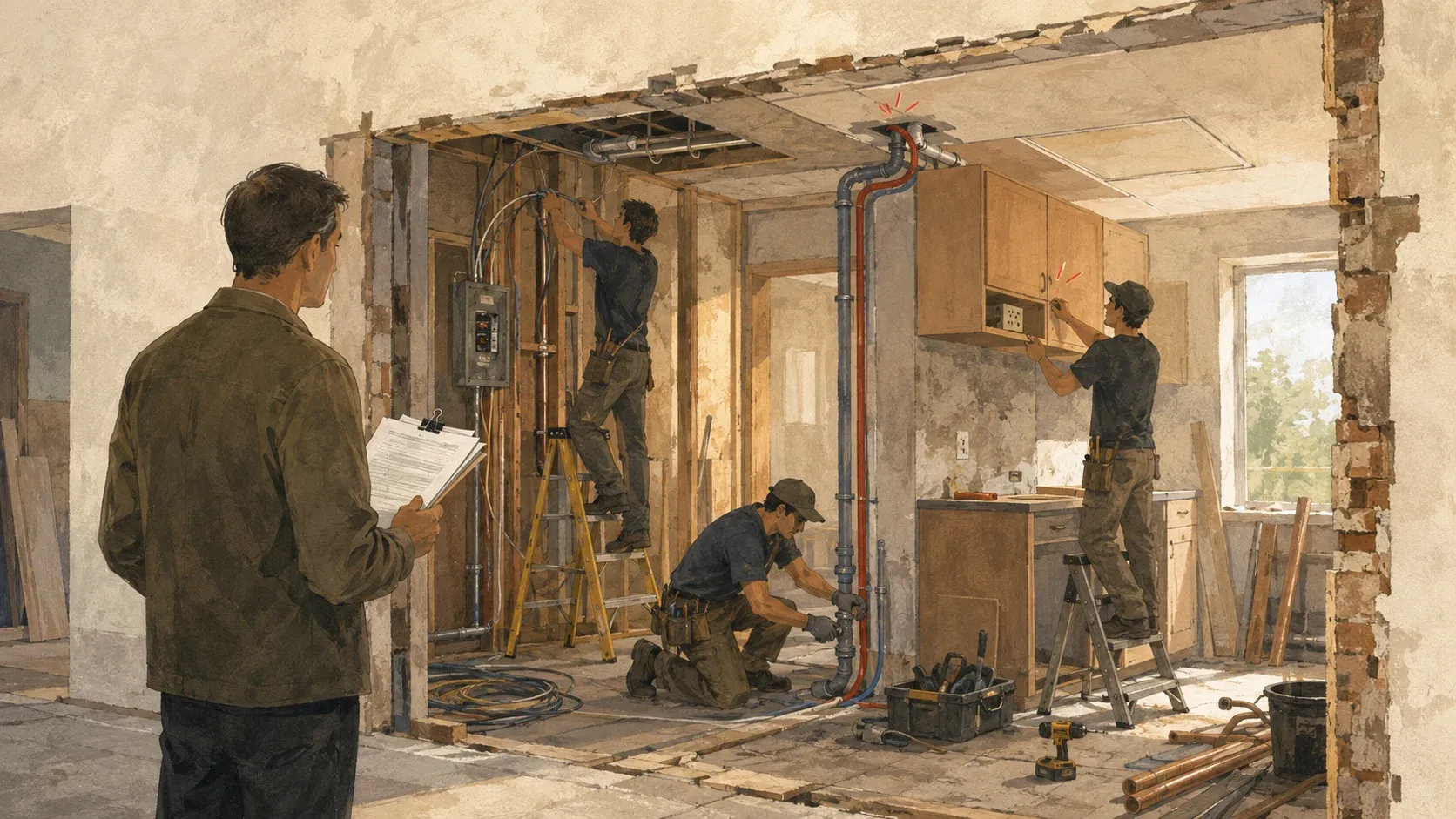
In renovation, this is called rework. The plumbing and electrical crew opens the wall and sees old pipes and wiring runs, but the work order only says “move the outlet,” so the report reads “wiring normal.” The carpenter builds the cabinets to the measurements. The ceiling crew closes the panels to the drawing. Every crew passes its own inspection. Only when the job is done does anyone notice the outlet is hidden behind a cabinet and the pipes collide with the ceiling, and that work has to be torn out and done over. No crew did anything wrong. The mistake was cutting the site into separate work orders, so what one crew saw when the wall was open never reached the next.
A general contractor can, of course, tighten acceptance. Demand photos. Demand full test output. But the finer the inspection, the more work the contractor has to redo to understand the site again, and the hours that subcontracting was supposed to save get eaten.
Where I still use subagents
So I use subagents only where information loss is small and the result can be checked at a glance: searching code, running tests, making mechanical edits. Anything that requires understanding relationships across many files, or where the approach is likely to change partway through, I leave with Fable inside one context until it is done. Whether to spawn a subagent at all is a decision I hand to the main model based on what it sees, and the default is no.
There is another route that is entirely workable. Fable produces a complete plan, the entire implementation goes to Opus 5 at xhigh effort, then Fable reviews and Opus makes the fixes. The result may not match Fable doing the work itself, but it costs far less, and each model’s ability is still spent where it counts.
That is the architect drawing up the plans, the crew building the whole job, and the site supervisor signing off at the end. Three roles, each doing its own work, nobody’s ability chopped into fragments. Flip it around, with Fable running Opus as a junior, and the loss comes from the layered handoffs, not from any weakness in Opus.
Split work horizontally, not vertically. Don’t make Fable the general contractor. Make it the architect and the supervisor.